
Narcissistic Abuse Recovery
Empowering Your Recovery Journey
A specialist trauma‑informed coaching service for individuals recovering from narcissistic abuse, emotional manipulation, and high‑conflict relationships.
This work supports you in understanding trauma patterns, regulating your nervous system, and rebuilding your identity after prolonged confusion, gaslighting, or self‑doubt. Using The Recovery & Reclamation Method™, sessions provide clarity, emotional strategy, and grounded guidance to help you move from survival to stability, confidence, and long‑term freedom. Coaching focuses on, amongst other things, boundary‑setting, nervous system regulation, trauma recovery, and rebuilding self‑trust so you can reclaim your life with clarity and emotional safety.
This is not an ordinary situation. Trying to navigate these dynamics without specialist support can leave you overwhelmed, destabilised and questioning your own reality. You need more than hope - you need clarity, emotional strategy and the strength to stay anchored in yourself.

Recovery & Reclamation Method™
A Three-Stage Trauma‑Informed Pathway from Survival to Self‑Leadership
The Recovery & Reclamation Method™ is the core structure that underpins all of my work. It provides a clear, compassionate, trauma‑informed pathway through the emotional, psychological and relational stages of healing after narcissistic abuse and chronic relational trauma.
Healing is not linear - and this Method honours that. It offers a safe, structured, repeatable pathway that supports you as you move between stages at your own pace, with your nervous system leading the way.
The Method unfolds across three stages: Recovery (to understand), Discernment (to protect) & Reclamation (to rebuild and reclaim).
Together, they guide you from stabilisation to embodiment - from surviving to living fully as your integrated, grounded, self‑led self.
Below, you’ll find the six phases that shape the deeper journey within the Method.
THE SIX PHASES OF THE RECOVERY & RECLAMATION METHOD™
These six phases describe the emotional and psychological journey you move through as you heal. They sit beneath the three stages and give shape to the deeper transformation.

Phase 1
Awareness & Understanding
This is where you begin to understand what has been happening. We identify manipulation tactics, trauma responses, behavioural patterns, attachment dynamics and the psychological impact of the relationship. You begin to make sense of your experiences with compassion and validation.
The Result: A deeper understanding of your patterns, your responses and the dynamics that shaped your experience.

Phase 2
Stabilisation & Grounding
We focus on calming the nervous system, reducing overwhelm and creating emotional safety. This phase helps you feel more anchored, less reactive and more in control of your internal world - whether you are still in the relationship or navigating life after it.
The Result: Greater emotional stability, reduced activation and a sense of internal safety.

Phase 3
Rebuilding Self‑Trust
As clarity and stability grow, we begin reconnecting you with your intuition, needs, values, boundaries and inner voice. This phase protects the rebuilding process by helping you trust your internal signals again — the very signals that were eroded through gaslighting, manipulation or chronic self‑abandonment.
The Result: A stronger connection to yourself, your instincts and your internal guidance.

Phase 4
Breaking Old Patterns
We shift the patterns that kept you stuck - people‑pleasing, fawning, over‑functioning, collapsing or repeating familiar relational dynamics. We strengthen boundaries, emotional literacy, communication and relational clarity.
The Result: Healthier behaviours, stronger boundaries and reduced repetition of old patterns.

Phase 5
Moving Forward with Strength
With a more stable foundation, you begin intentionally building your future. This includes emotional resilience, secure communication, conflict navigation and relational confidence. You start making choices from clarity rather than fear.
The Result: Greater confidence, emotional maturity and the ability to move forward with grounded self‑leadership.

Phase 6
Integration & Freedom
This is the embodiment phase - where healing becomes a lived experience. You begin to rebuild and reclaim your integrated identity, maintain boundaries with ease, communicate with clarity and build relationships that reflect your healed self. This is where the Reclamation Programme lives.
The Result: A deep sense of peace, authenticity, emotional freedom and long‑term stability.
A Safe, Adaptive, Trauma‑Informed Journey
Although the Recovery & Reclamation Method™ provides a structured pathway, healing is never linear. You may move back and forth between phases as deeper layers of understanding, regulation and self‑trust develop.
Your journey is always tailored to:
- your pace
- your nervous system
- your lived experience
- your goals
- your capacity
- your stage of recovery
The three stages of the Method are completed in order - but you can take breaks between them whenever life, capacity or cost require it. The process remains steady, grounded and effective at your pace, and there is never any pressure to move on to the next stage.
The Impact of Narcissistic Abuse
Narcissistic Abuse is Never Acceptable
Narcissistic abuse is a profound form of psychological trauma that leaves deep emotional scars, often eroding self-esteem and distorting one’s sense of reality. Because it manifests through covert manipulation, gaslighting, and emotional neglect, it can be incredibly challenging to recognise the situation and find the clarity needed to seek help.
The Impact on Mind and Body
The consequences of this trauma are significant and lasting. It often leads to complex mental health challenges, including chronic anxiety, depression, and C-PTSD. Many survivors struggle with emotional regulation, a fractured self-perception, and "brain fog" or cognitive difficulties.
The Physiological Toll
It is vital to understand that emotional abuse does not stay confined to the mind; it has a measurable impact on your physical health. Prolonged exposure to high-conflict dynamics can lead to:
- Nervous System Dysregulation: Leading to chronic fatigue or a permanent "fight or flight" state.
- Physical Health Issues: Including cardiovascular strain, auto-immune disorders, and chronic pain.
- Coping Mechanisms: Such as substance reliance, used to numb the intense emotional pain.
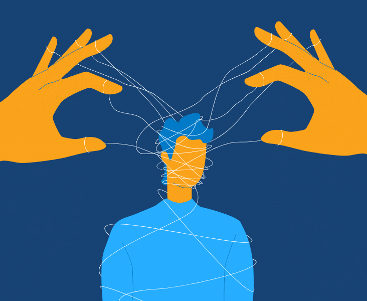
I specialise in deconstructing this trauma. By understanding the science of how your body has reacted to this environment, we can begin the work of regulated, sustainable healing.
This coaching is for you if...
...you have already left a narcissist/high-conflict personality
but still feel stuck & want to be free
...you are still living with a narcissist/high-conflict personality
& need tools to stay grounded daily
...you have a narcissistic/high-conflict personality parent, boss or sibling
and want to make calm & smart decisions
...you are unsure what you are experiencing
& need guidance to work it out
Education, Awareness & Science-Backed Empowerment
An important part of recovery is understanding the psychological impact and relational dynamics of narcissistic abuse. Sessions incorporate psychoeducation around common manipulation tactics, trauma responses, nervous system regulation, red flags, behavioural patterns, and rebuilding healthier ways of thinking, feeling, and relating.
Using applied neuroscience and evidence-based strategies, each session is tailored to your individual journey. This is not simply about talking through the past - it is about creating deeper awareness, lasting transformation, and the ability to move forward in a healthier and more empowered way.
Neuroscience, Neuroplasticity, Positive Psychology, Psychoeducation & Psychoneuroimmunology
Applied Neuroscience focuses on understanding the brain and nervous system: how the brain functions, and how it influences thoughts, emotions, and behaviours, and how this knowledge can be used to improve performance, well-being, and understanding. and using that knowledge to address real-world problems and challenges.
Neuroplasticity is the brain's ability to change and adapt, re-organising itself by forming new neural connections and breaking old ones. It is a well-established concept in neuroscience, with substantial scientific evidence and studies to support it, and is increasingly recognised as a key factor in both mental and physical well-being. This ability to adapt and change is crucial for recovery from trauma.
Positive Psychology, the scientific study of human flourishing, provides tools and practices that can leverage neuroplasticity to promote greater happiness and resilience. Research shows how positive thinking and related practices can create new neural pathways and strengthen existing ones.
Psychoeducation is the process of learning about psychological, emotional, behavioural, and nervous system responses, and how these influence thoughts, behaviours, and relationships. Within narcissistic abuse recovery, psychoeducation helps individuals understand manipulation dynamics, trauma responses, attachment patterns, and nervous system dysregulation.
Psychoneuroimmunology, an interdisciplinary field that explores the interactions between psychological processes, the nervous system, and the immune system, explores how psychological factors like stress, emotions, and mental health can impact immune responses and overall health.